Most small business owners spend weeks agonizing over their logo, their tagline, and the color of their call-to-action button. Then they spend about four minutes picking a hosting plan — usually whatever the cheapest option is on whatever page they land on first.
It's an easy mistake to make. Hosting feels invisible. You pick it once, forget about it, and move on to the things that feel more important. But here's the problem: a bad hosting decision doesn't punish you immediately. It punishes you slowly — through sluggish load times, unexpected downtime, security gaps, and a site that quietly loses visitors every single day.
If you're thinking carefully about hosting for small business, you're already ahead of most people. Here's what actually matters.
What "Cheap" Hosting Actually Costs You
Shared hosting plans that cost $2–$5 a month exist for a reason. They work fine for hobby projects and low-traffic personal websites. But when real customers are visiting your site — and their first impression of your business is the time it takes your homepage to load — cheap hosting starts to have a very real price tag.
Page speed directly affects conversion rates. Amazon famously found that every 100ms of extra load time cost them 1% in sales. That's Amazon, with millions of visitors. For a small business with a few hundred monthly visitors, one slow second might be the difference between a booking and a bounce.
Beyond speed, oversold shared hosting puts your site on a server with hundreds or thousands of other websites. If one of them gets hammered with traffic or gets infected with malware, your site suffers the consequences too.
The Right Hosting for Small Business Does Three Things Well
1. It Stays Up
Uptime sounds like a technical stat until you realize what it actually means. A host with 99% uptime sounds impressive — until you do the math and realize that's over 87 hours of downtime a year. For a business that depends on its website for leads or sales, that's not acceptable.
Look for hosts that commit to 99.9% uptime or better, and more importantly, hosts who back that commitment with actual infrastructure — not just a number on a sales page.
2. It Loads Fast — Everywhere
Speed isn't just a user experience issue. Google uses page speed as a ranking signal. Slow sites rank lower in search results, meaning fewer people find your business in the first place. And when they do find you, a slow site sends them straight to a competitor.
The basics of fast hosting include SSD storage, a recent version of PHP, server-side caching, and a CDN (content delivery network) that serves your assets from a location close to your visitors.
3. It Protects Your Site Without Requiring a Security Degree
Small businesses are not too small to be targeted by bots, scrapers, and automated attacks. If anything, smaller sites are often easier targets because they're less likely to have proper protection in place.
A good hosting plan — especially a managed one — handles the security layer for you. That means a firewall that filters malicious traffic before it hits your site, automatic backups that run even when you forget to think about them, and someone monitoring things at the server level so you don't have to.
Why Managed Hosting Changes the Equation for Small Businesses
Managed hosting is worth understanding, especially if you're running a business and don't have a dedicated IT person on staff (most small businesses don't).
On a standard shared or VPS plan, the server is your responsibility. Security patches, PHP updates, performance tuning — that's on you, or whoever you hire to handle it. On a managed plan, the host takes ownership of the server environment. You focus on running your business. They handle everything underneath your website.
That shift in responsibility is significant. Most website owners don't realize their PHP version is three years out of date until something breaks. A managed host keeps that current automatically.
We handle that maintenance layer for all our clients — server updates, security configurations, and backups run on a schedule without anyone needing to log in and press a button.
One Thing Small Business Owners Consistently Overlook: Staging
Here's a scenario that plays out constantly. A small business owner updates a plugin, or makes a change to their homepage, and suddenly something breaks. The site looks wrong, or worse — it's down entirely. And now they're scrambling to fix a live website while real customers try to visit it.
A staging environment solves this. It's a private copy of your site where you can test changes safely before pushing them live. Most people think of staging as a developer tool, but it's genuinely useful for any business owner who makes regular changes to their site.
When a staged version is ready, promoting it to production should take one click — not a manual migration. That's the kind of workflow that removes the anxiety from making changes to your own website.
How to Actually Evaluate Hosting for Small Business
When you're comparing plans, go beyond the price. Here's a practical checklist:
- What does their uptime track record look like? Look for independent monitoring data, not just claims on their homepage.
- Where are their servers located? A server in Europe serving mostly US customers will add measurable latency.
- Do backups run automatically? And more importantly — how easy is it to actually restore from one?
- What happens when something breaks? Check support hours, response times, and whether you can reach a human.
- Is the plan managed or unmanaged? For small businesses without technical staff, this distinction matters more than almost anything else.
Starting Right Is Easier Than Fixing It Later
Migrating a website is annoying at best and risky at worst. DNS changes, database exports, broken links — it's the kind of project that always takes longer than expected. Starting on the right hosting plan means you're less likely to need to do it at all.
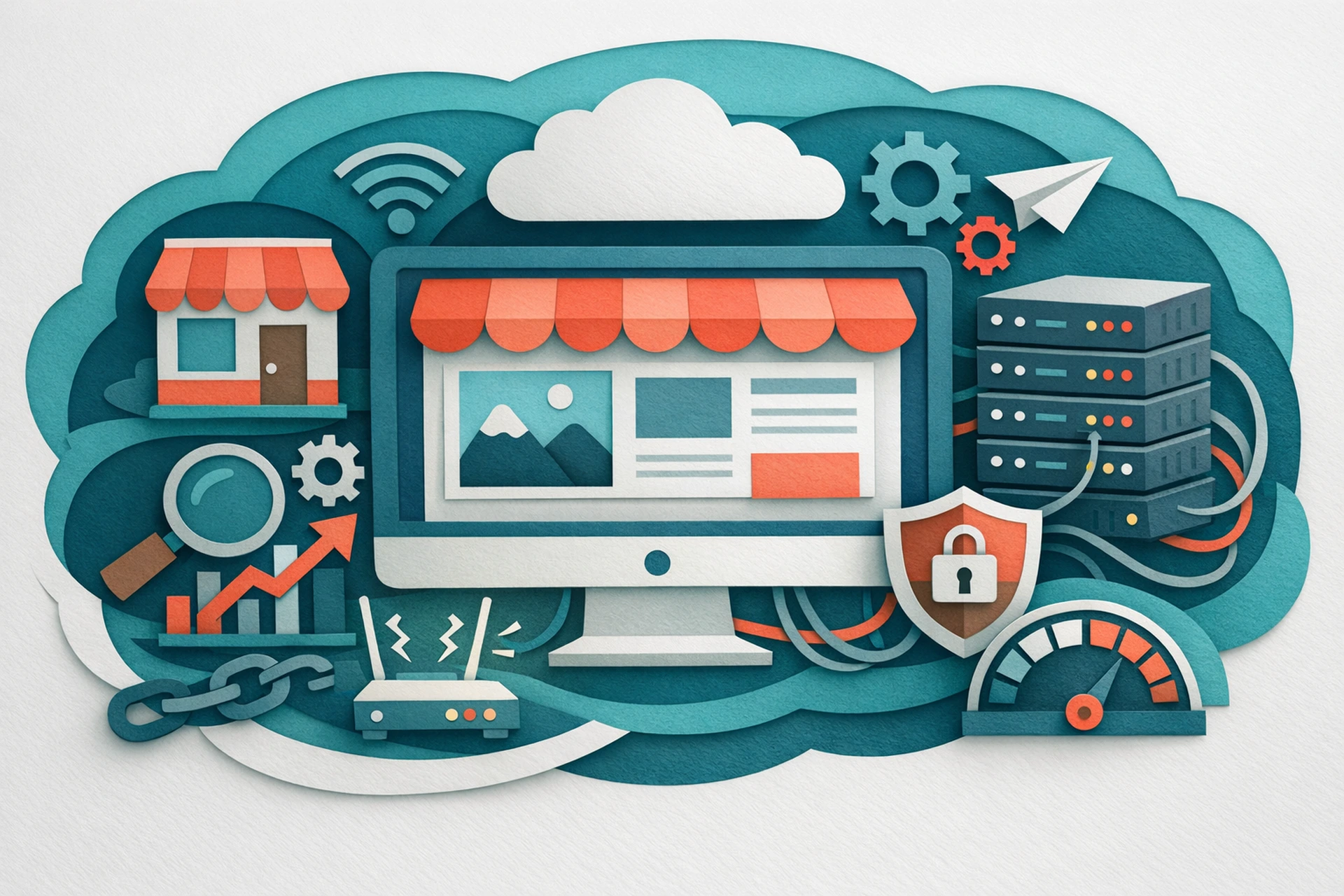
Think of your hosting the same way you'd think about a physical storefront. You wouldn't open your shop in a building with unreliable electricity and a landlord who doesn't answer the phone. Your website deserves the same standard.
Good hosting for small business isn't about having the most server resources or the flashiest dashboard. It's about reliability, speed, security, and support — consistently, every day, without you having to think about it. Get those four things right, and your website becomes an asset that works for your business around the clock.